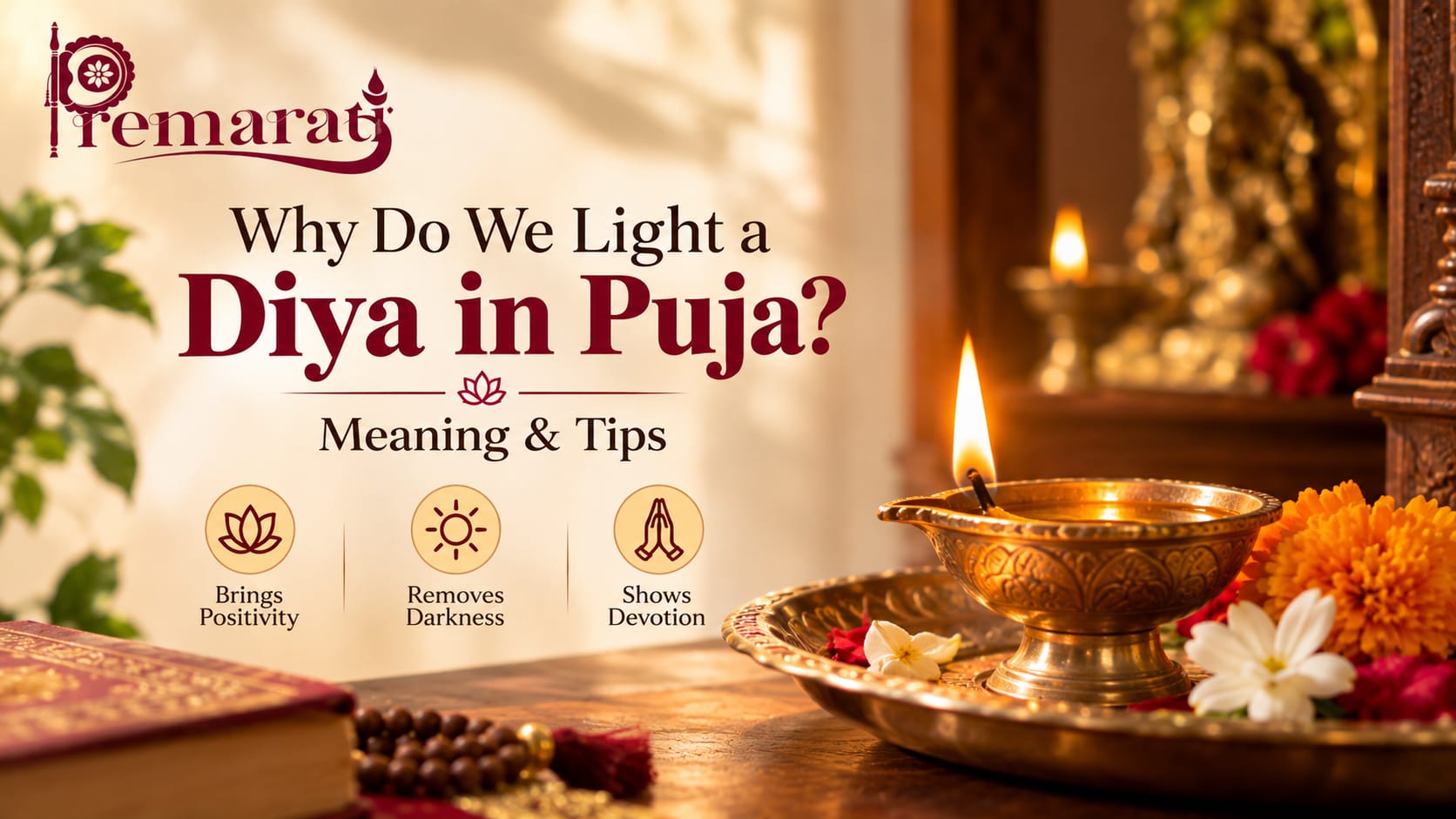
The diya is one of the most important puja essentials in Hindu homes, symbolising light, purity and knowledge over darkness. This guide explains why we light a diya in puja, what you need, when to light it, and how to do it safely as part of a simple daily worship routine.
Why Is a Diya Important in Puja?
Walk into almost any Hindu home in the morning or at dusk and you will likely see a small, steady flame glowing in front of the deities. That flame comes from the diya, one of the most recognisable puja essentials in Hindu worship. A diya is lit during daily prayers, during aarti and on nearly every festival, from Diwali and Navratri to Ganesh Chaturthi and Karthigai Deepam.
For many families, lighting a diya is the first act of puja. It marks the moment when the day's busy routine pauses and the mind turns towards devotion. That is why the diya in puja is such a familiar and cherished part of daily worship.
The Traditional Meaning and Significance of Diya in Hindu Worship
A diya is a small lamp that holds a flame. In Hindu tradition, light is closely tied to purity, knowledge, positivity and the removal of darkness. The flame is often understood as a symbol of the soul, steady and bright, rising upwards.
Spiritually, the diya carries several layers of meaning:
Light over darkness: The flame stands for knowledge and awareness overcoming ignorance.
Purity and auspiciousness: Light is considered pure, which is why no puja begins without it.
A witness to prayer: Many devotees see the diya as a sacred presence that accompanies the worship.
Focus and calm: A steady flame gives the eyes and mind something to rest on, making prayer more peaceful and contemplative.
This is the heart of the significance of diya in Hindu worship. The lamp is not just decoration. It is a reminder to bring light, clarity and goodness into everyday life.
Lighting the diya also sets a peaceful, reflective tone around the home mandir. Premarti presents the puja diya as part of a simple and meaningful home worship routine, one that fits easily into modern life without losing its tradition.
What Is Used to Light a Diya?
You do not need an elaborate setup. A traditional diya usually includes:
A diya (lamp): Commonly made of clay (mitti), brass, copper, silver or another suitable material. Clay diyas are popular for festivals, while brass diyas are often kept in the mandir for daily use.
A cotton wick: Either a regular round wick (batti) or a long wick (lamba batti), depending on the lamp and family custom.
Ghee or oil: Cow ghee is widely preferred for puja. Sesame oil (til ka tel), mustard oil or other cooking oils are also used, depending on the tradition.
A matchbox or lighter: To light the wick safely.
The choice of oil, ghee, wick and diya can differ according to family traditions and regional customs. A South Indian household may use a tall brass vilakku with sesame oil, while a North Indian home may light a small ghee diya, and both are equally valid.
Types of Diyas Used in Puja
Clay (mitti) diyas: Simple, affordable and earthy. Popular for festivals like Diwali.
Brass diyas: Durable and long-lasting. A favourite for daily puja in the home mandir.
Panchmukhi or multi-wick diyas: Used on special occasions and in some temple traditions.
Akhand diya: A lamp kept lit continuously for a set period during vows or festivals such as Navratri, only where someone can safely tend it.
When Do We Light a Diya?
A diya is generally lit at the start of puja and may also be kept lit while the prayers are offered. Many families light a diya during morning puja and evening puja, which are the most common times for daily diya lighting.
Some common occasions include:
Daily morning and evening prayers
Aarti
Festivals such as Diwali, Navratri, Ganesh Chaturthi and Karthigai Deepam
Housewarming (griha pravesh) and other auspicious ceremonies
Special pujas, vrats and family celebrations
On festivals and special occasions, extra diyas are often lit to add to the decoration and enhance the atmosphere of worship.
How to Light a Diya for Daily Puja: Simple Steps
Clean the diya and the area where you will place it.
Place a fresh wick in the diya, with the tip slightly raised.
Add ghee or oil until the wick is soaked and the diya is filled to a suitable level.
Light the wick with a matchstick or lighter, and bring your attention to your prayer.
Place the diya in front of the deity or in the designated spot in your mandir.
Offer your prayers or perform the aarti.
Family customs on the exact direction, number of wicks or placement may vary, so follow what your family tradition teaches.
Keep the Diya Safe
A diya is a small flame, but it still needs care. A few simple precautions go a long way:
Always place the diya on a stable, heat-resistant surface.
Keep it away from curtains, papers, garlands and other combustible objects.
Keep it out of reach of children and pets.
Never leave a burning diya unattended. Put it out safely or make sure someone is present, especially if you leave the house.
Let the diya cool completely before you clean or move it.
A Simple Daily Practice
Puja does not need to be long or elaborate. Even a clean diya, a fresh wick and suitable oil or ghee are enough to make lighting a diya a meaningful part of your home puja routine. Over time, this small habit can become a calm anchor in your day, a few quiet moments of gratitude and focus.
Understanding why a diya is used in puja and how to light a diya for daily puja helps turn an everyday ritual into something more mindful.
Frequently Asked Questions
Why do we light a diya before puja?
The diya symbolises light, purity and knowledge. Lighting it first invites a calm, positive atmosphere and marks the beginning of worship.
Is ghee or oil better for a diya?
Both are used. Ghee is widely preferred in many households, while sesame or other oils are common in different regions. Follow your family tradition.
Can I light a diya every day?
Yes. Many families light a diya daily during morning and evening puja. Even a simple diya with a fresh wick is enough.
Which diya is best for the home mandir?
Clay, brass and other traditional diyas are all suitable. Choose one that is stable, easy to clean and safe to use.
Should a diya be kept burning all the time?
Not unless someone can safely look after it. For safety, never leave a diya unattended.