Agarbatti and dhoop are both incense used in daily Hindu puja, but they differ in form, fragrance and smoke. Agarbatti is a thin stick that burns steadily, while dhoop comes as cones, sticks or other forms and can be stronger. This guide compares them side by side and shares simple tips to choose and use them safely.
What Are Agarbatti and Dhoop?
Both Agarbatti and dhoop are widely used types of incense in Hindu rituals. They are commonly referred to as home temple items and are placed in the mandir as part of the daily puja. Agarbatti and dhoop are therefore common incense in puja.
They can differ in shape, how they are made, how they are burned, and how they smell when burned during puja, but both are used to make perfume.
What Is Agarbatti?
Usually, agarbatti, also known as an incense stick, is formed in a stick shape and is intended to burn gradually when lit. Agarbatti is commonly used as part of home puja and daily worship.
Easy to light, it can be used in an incense holder and is convenient for daily worship. There are also a number of different scents for it to offer, so that households can choose based on their taste and age.
What Is Dhoop?
Dhoop is another kind of incense usually utilised during puja. It can be available in the form of cones, sticks, or any other preparation of the product according to tradition. Dhoop can also be used as part of agarbatti and dhoop for daily puja.
Comparatively, it is also capable of giving off a more potent aroma and smoke when used in Dhoop as opposed to some Agarbattis; hence, it is best to place it in a suitable holder and use it in a ventilated area.
Agarbatti vs Dhoop: Key Differences
1. Form and Appearance
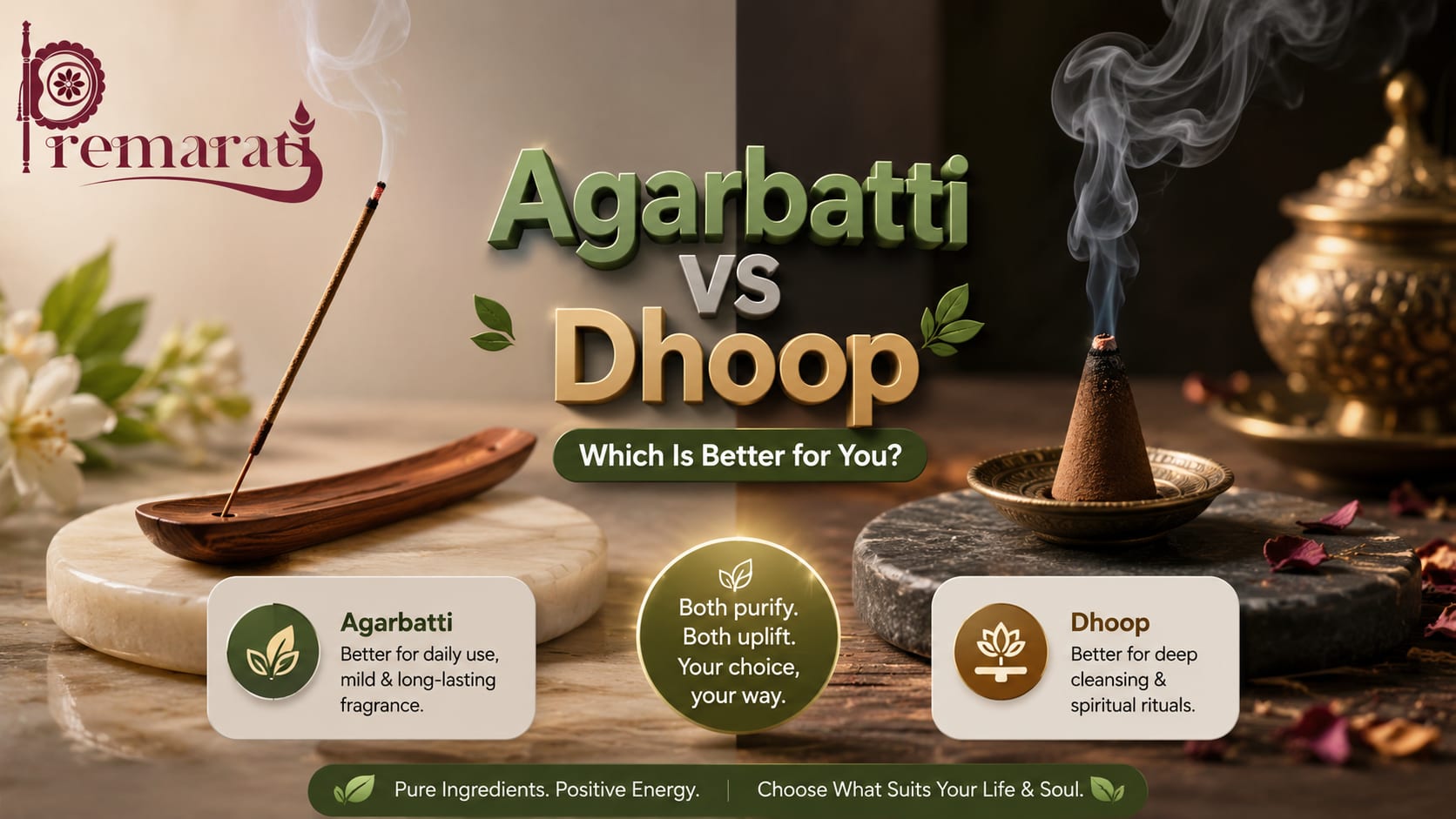
Curious to know what agarbatti and dhoop are and how they're different? Like us, you've probably seen those thin, long agarbattis with a bamboo or wood in the middle, right? Dhoop, on the other hand, comes in the form of sticks and cones, and sometimes in solid form as well, without a bamboo or wood middle.
2. Use in Puja
Then, why agarbatti for daily puja? There are many benefits that agarbatti offers, and some of them are being hassle-free, safe and quick to use. All you need to do is light a match and zap; it's your time for daily puja. Whereas, some people also prefer to use dhoop for puja and that too for special poojas.
3. Fragrance
Here's the deal about perfume: agarbatti gives you a constant, slow and uniform fragrance while burning. Dhoop will definitely give you a somewhat stronger and more pungent scent, but again that entirely depends on the particular dhoop in question.
4. Convenience
Is convenience your thing? Agarbatti is easy to burn and insert into an incense holder. Dhoop may need a particular holder or burner, based on whether you're using cones, sticks or another type.
5. Smoke
What about the smoke? The smoke levels of agarbatti and dhoop differ from product to product. Sometimes, dhoop might seem to emit more smoke, and many agarbatti offerings are made with a light and slower burn in mind.
The agarbatti vs dhoop comparison can help explain the difference between agarbatti and dhoop while choosing incense for puja.
Which One Should You Use?
There's not a one-size-fits-all answer to follow. The decision as to the use of agarbatti or dhoop may be influenced by family usage, type of puja, the fragrance and air ventilation in the worship area. Therefore, when considering which is better, agarbatti or dhoop, for puja, individual preferences and traditions can be considered.
Over the course of a daily devotional, select a blend that works for you and is safe to use. Premarati supports a simple approach to choosing between agarbatti and dhoop according to individual worship needs.
A Simple Safety Reminder
Always put the agarbatti/dhoop in an appropriate container on a firm base. Obey the following precautions: Ensure the incense is not put in close contact with curtains, paper or any combustible items and allow good ventilation in the room.
Simple choices, mindful worship. Discover the right incense for your daily puja.