Sindoor, kumkum and roli are red powders used in Hindu rituals, but each has its own use and meaning. This guide explains why red is sacred, how sindoor, kumkum and roli differ in marriage, tilak and puja, and how to choose pure powders and store them properly for everyday worship and festivals.
Sindoor, Kumkum and Roli: Understanding the Differences in Hindu Rituals
Have you ever entered a puja room and noticed those tiny bowls of red powder? If you have, you may have thought about whether sindoor, kumkum, and roli are anything similar. Well, the short answer is no! These are all distinct and specific to multiple instances of Hindu rituals. People often ask which powder to use in which ceremony, so we're here to demystify it for you. Understanding the difference between sindoor and kumkum also helps worshippers choose the right powder for different traditional Hindu offerings.
1. Why Red Is So Important in the Hindu Tradition
So, why is this colour so popular in Hindu rituals? The eye-popping colour is a sign of energy, good fortune, marriage, and the divine female aspect of nature. It stands for Shakti, the force of new creation. And so, every puja, festival, and wedding day features red powders of one kind or another, with a few exceptions.
2. What Is Sindoor?
Sindoor is a crimson vermilion colored powder that has an inspiring origin story. The origins of sindoor are rooted in turmeric and lime, or older organic minerals and herbs. The core importance of sindoor is in weddings. Have you ever seen a married Hindu woman with sindoor smeared in her hair partition? That is often when the groom smears his sindoor into her hair partition.
2.1. Sindoor Significance
It's a mark of one's relationship status, devotion, and the husband's health.
It is partaken by Goddess Durga and Goddess Lakshmi and offered to Goddess Durga and Lord Hanuman in the form of sindoor mixed with some oil.
Married women happily lather each other with sindoor and the Goddess in a ritual called sindoor khela on the Vijaya Dashami day in Bengal.
3. What Is Kumkum?
Kumkum – colour or a powder prepared using dry turmeric with slaked lime or a similar substance can convert yellow turmeric to the red colour. It's finer and softer than sindoor and is employed for the tilak or bindi that you put on your forehead.
3.1. Kumkum for Puja
Applied to the worshippers' foreheads as a benediction after the worship.
Presented to deities (such as a goddess) at the foot or on the forehead of the idol.
Offered on the threshold and designed for the kalash & the puja thali during propitious moments.
Here's the thing: Since kumkum is turmeric-based, it is cooling and purifying – ideal for the area between the eyebrows, which is thought of as the point of spiritual concentration.
4. What Is Roli?
And roli? Very popular in North India, roli is a cousin to kumkum. Made from turmeric and lime and seasoned with a little camphor or some other medicinal substance, it is dried and powdered into a fine red powder. Roli plays a vital role in tilak on special occasions like Bhai Dooj, Raksha Bandhan, and Diwali.
Understanding roli meaning is important because it represents auspiciousness, blessings and good fortune in many Hindu family traditions.
Roli is generally combined with a small amount of unbroken rice (akshat) for tilak. The rice is a symbol of prosperity and perfection, and roli is a symbol of good omen.
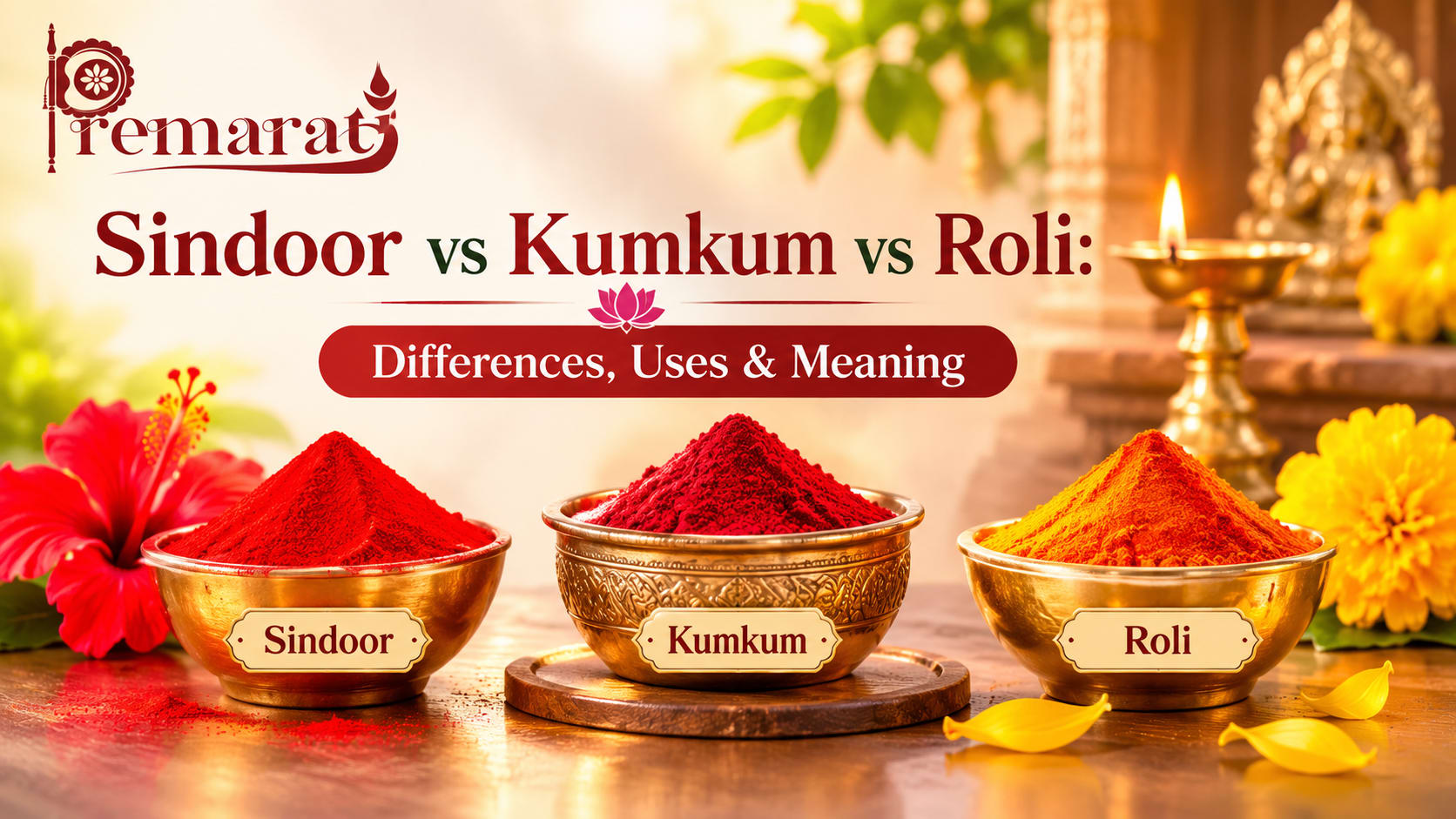
5. Sindoor vs Kumkum vs Roli at a Glance
Sindoor
Uses and significance: Used in marriage, in the parting of a married woman’s hair and as an offering to deities. It is linked with the union of opposites and with Shakti.
Appearance: Coarse, shiny vermilion powder.
Kumkum
Uses and significance: Used for the special forehead tilak, offered during puja and used to invoke and bless the devtas.
Appearance: A soft, fine, red-coloured powder.
Roli
Uses and significance: Used for tilak with rice (akshat), on festivals and during family occasions.
Appearance: A fine powder, a shade lighter red.
6. Choosing Quality Powders for Your Puja
How do you select the powders for your rituals? Purity is important in worship. Any commercial powders you find may have harsh chemicals or artificial dyes, which lead to skin irritation and oppose the intention of offering something pure. Here's what you need to understand:
When purchasing puja samagri, it is important to select powders that are suitable for their intended ritual use.
Tips for Choosing Quality Powders
Seek kumkum & roli made of turmeric and natural products.
Buy a sindoor that's specific and free of any unwanted additives.
Powders should be stored in a dry container with a clean finger or spoon.
7. Final Thoughts
Despite their vibrant red hue, sindoor, kumkum, and roli aren't all the same. Learning the differences can give you more significance to your rituals, and one less thing to worry about. That's the sort of knowledge we're happy to help with at Premarati by offering puja items that can elevate every ritual, custom, or puja with a prescribed red powder, whether for a special occasion, festival, or everyday worship.
Every shade of red carries its own meaning, so choose the right powder for every ritual. Let Premarati help you find pure, clearly described puja essentials for weddings, festivals and daily worship.