Kosa-Kushi, Panchapatra and Achamani are traditional vessels used in Bengali puja, but their names and forms can vary by region and family. This guide explains what each one means and how it is commonly used, and shares simple tips for choosing brass puja utensils and buying them online with confidence.
Getting to Know Traditional Puja Vessels
Conventional puja vessels are used for organising materials used during pujas. They can take different shapes in different areas, languages and ritual sets. Ritual vessels or sets are referred to by specific names or terms in Bengali households, such as Kosa-Kushi, Panchapatra and Achamani. Those who are new to placing pujas might find it easier to understand what they use in the puja even if they know the list of the things.
Here it is worth remembering that ritual practice is not necessarily uniform. A vessel can have a special use that may be used by a priest or family. In making arrangements for a specific ceremony, refer to the instructions provided for the ceremony, and do not assume that they are the same as every household.
Kosa-Kushi Meaning and Common Use
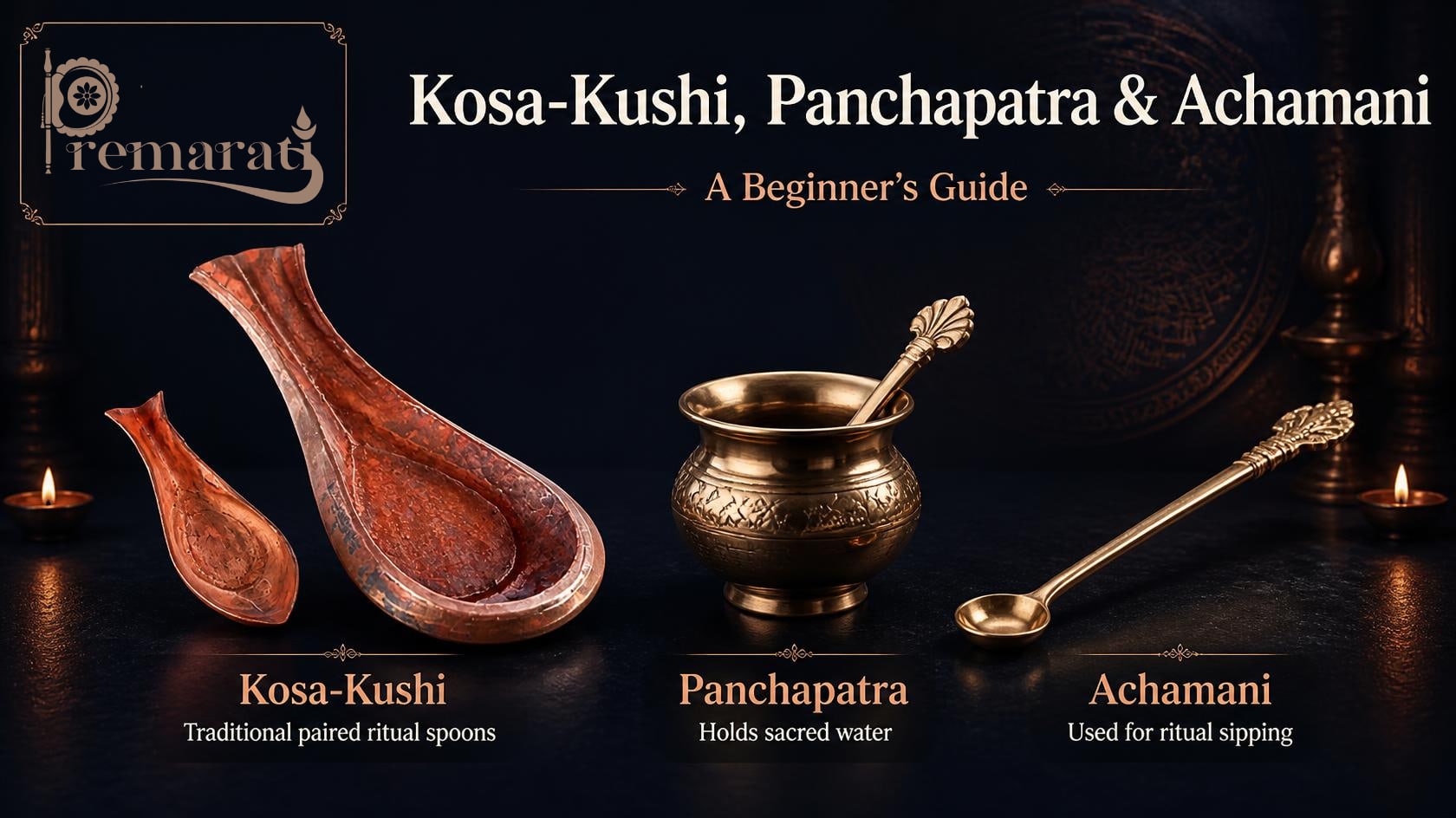
In general, the term Kosa-Kushi denotes a pair of traditional small boats, used for ritual purposes and still popular among the Bengalis. Depending on the ceremony and local custom, it may be in the form of a blank symbol or outline. The form and use can vary depending on the ceremony and local practice. They are frequently sold in pairs and sometimes in brass or other suitable metal for ritual utensils.
When considering a purchase, make sure it includes a pair, and also check the shapes to see if the set in the listing corresponds to the one you purchase. Product descriptions might be given with regional spellings and different transliterations, so written dimensions or photos could be helpful when comparing. Ask the necessary form from the leader of the ritual if the set is needed for a particular ritual.
Panchapatra and Its Use in Puja
A Panchapatra is generally believed to mean a small container for water for ritual use. It is sometimes combined with a small spoon or utensil for use in the rituals. The name and exact arrangements vary from tradition to tradition; check the product description to see what they include in their name.
When selecting a practical vessel, take into consideration the vessel's capacity, stability, and ease of cleaning. For a small home altar, some prefer a compact vessel and for a more elaborate altar, a larger vessel. Make sure that the material is well labelled and use care as directed by the seller.
What Is an Achamani?
Achamani (also spelled Achamaniya or various regional variants) also denotes ritual water and sipping of it, or drinking water for ritual purification for a few Hindu rites. In a retail listing, the term can refer to a specific small vessel, or to a ritual accessory related to the vessel. Although this isn't always consistent, buyers should check the shape and function meant to be served when considering the word itself.
If the Achamani is mentioned in a set, please see the entire Achamani and compare it with your list of pujas. An accurate photo to view, dimensions and material description will help prevent ordering something that doesn't fit your needs for your ceremony.
Choosing Bengali Puja Utensils
Traditional puja dishes are often made of brass, which has a golden lustrous effect, and others are also available. Read the given material, weight, finish and care instructions. Search for a solid foundation, round edges and a structure that looks sturdy for frequent use. When plating or coating, be sure to clean the product according to the coating instructions, and remember to clean the surface to avoid damaging the product's finish.
When buying Bengali puja utensils online, you can cross-check the elements included along with the puja utensils in the listing and whether the listing illustrates the actual set of utensils. Please do not expect accessories to be shown in a picture unless stated in the description.
Build Your Puja Set with Confidence
Kosa-Kushi, Panchapatra and Achamani are words that are significant to master when planning for traditional worship, but are subject to variation in the form and usage of each word. Begin with the suggested list you supplied in your ceremony, check anything you don't know and then compare materials and dimensions. An appropriate selection can facilitate preparation and ensure that your household's practices are followed.
Know your puja vessels, and every ritual feels simpler and more meaningful. Let Premarati help you choose traditional Bengali puja utensils with clarity and confidence.