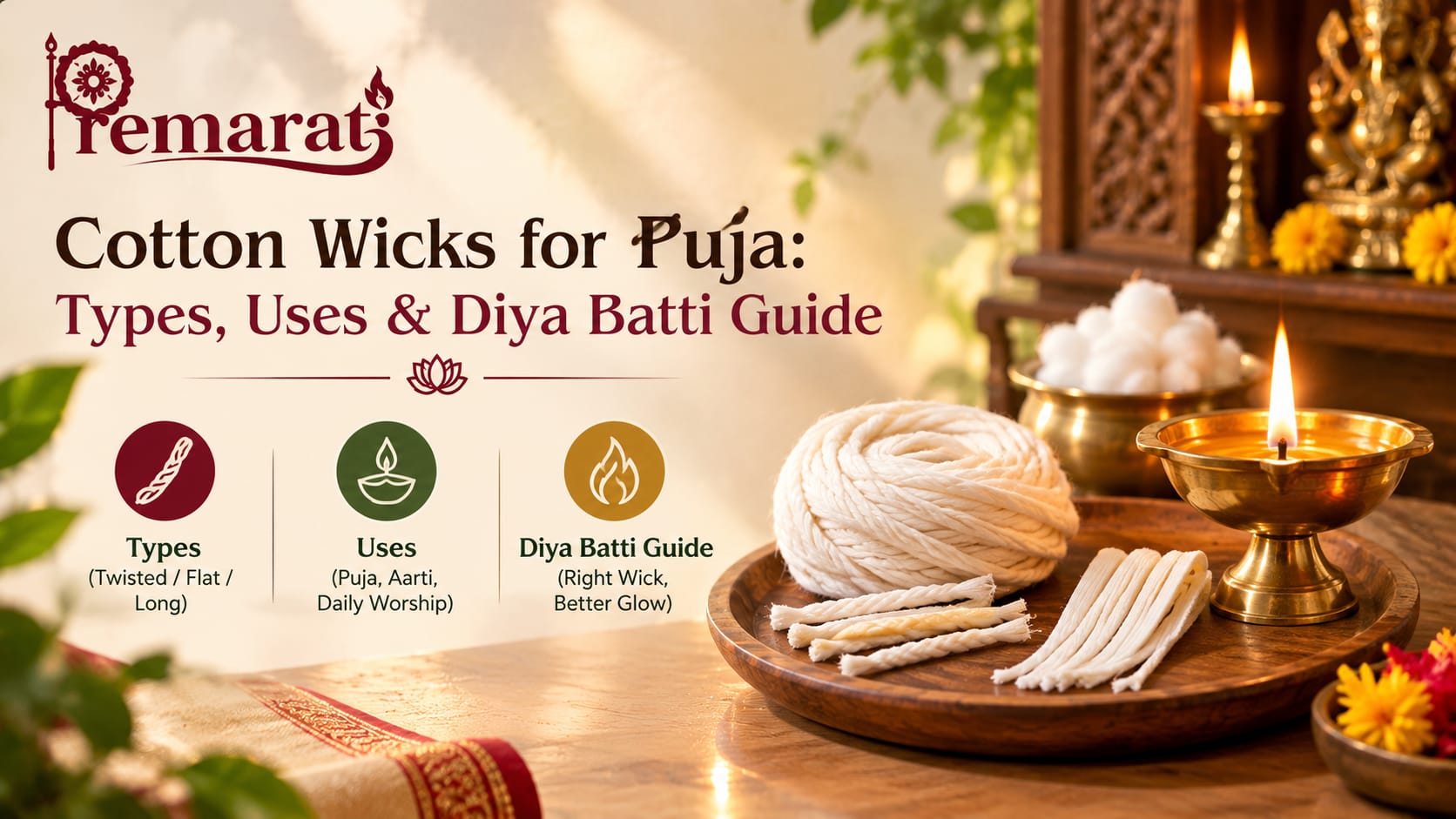
The small cotton wick inside a diya decides how the flame burns. This guide explains the types of cotton wicks for puja, from round and long to twisted and flat, and shows how to choose the right diya batti, use it safely and store it so it is ready for daily worship, aarti and festivals.
A diya may be the most visible part of a traditional lamp, but the small cotton wick inside it determines how the flame is sustained. Whether you are lighting a lamp during morning prayers, preparing for evening aarti, or arranging a festive altar, choosing suitable cotton wicks for puja can make the practical side of worship simpler.
From small round wicks to longer twisted varieties, different shapes are available for different lamps and preferences. Understanding these options helps you select a diya batti that suits your ritual rather than buying a type that may not fit your needs.
What Are Cotton Wicks for Puja?
A cotton wick is a strand or shaped piece of cotton that draws oil or ghee towards the flame through capillary action. As the fuel reaches the heated end, it burns and sustains the light.
Cotton wicks are widely used in Hindu worship because they are simple, familiar, and suitable for many traditional oil lamps. They are used in everyday puja, aarti, festival worship, and other observances where a diya is part of the ritual.
The wick's material, thickness, length, and shape influence how it sits in the lamp and how it burns. The right choice depends on the lamp's design, the fuel used, and the intended duration of the lighting.
Which Types of Diya Batti Are Available?
Round cotton wicks are compact and convenient for small lamps and everyday worship. Their shape makes them easy to place in suitable diya cups, although the exact fit depends on the size and design of the lamp.
Long cotton wicks are useful for lamps with a longer wick channel or for devotees who prefer a longer wick that can be positioned securely. The wick should still match the lamp; extra length alone does not guarantee a longer or better flame.
Twisted cotton wicks are formed by twisting cotton fibres together. They are a familiar option for many oil and ghee lamps and can be adjusted to suit different diya designs.
Flat or broad wicks may be used in lamps designed to accommodate a wider wick. They can create a different flame shape from a narrow twisted wick, so it is important to follow the lamp's design and avoid overfilling the vessel.
Some retailers also sell pre-shaped or ghee-coated wicks. These may offer convenience, but check the product label to understand the materials and whether the wick is intended for your type of lamp.
How to Choose the Right Cotton Wicks for Puja
Rather than choosing by appearance alone, consider four practical factors.
First, check the size of your diya. A small lamp may work best with a compact wick, while a larger lamp may accommodate a thicker or longer one. A wick that is too large can produce an unnecessarily high flame or be difficult to position safely.
Second, consider the fuel you use. Some devotees use ghee, while others prefer oils traditionally used in their household worship. The wick should absorb the chosen fuel adequately and fit securely in the lamp.
Third, check the material and construction. If you prefer cotton wicks made from pure cotton, look for clear product labelling rather than relying only on words such as “natural” or “traditional.” A well-formed wick should be easy to handle and should not contain visible non-cotton fibres if the product is sold as pure cotton.
Finally, consider the purpose of the ritual. A small daily diya, aarti lamp, and a large ceremonial lamp may require different wick shapes. If a priest or family tradition prescribes a particular form, follow that guidance.
How to Use Diya Cotton Wicks Properly
Place the wick in a clean, stable lamp and position its tip so it can be lit without the wick falling out. Add an appropriate amount of oil or ghee, taking care not to overfill the vessel. Light the exposed end and observe the flame to ensure it remains stable.
Keep the lamp on a heat-resistant surface, away from curtains, paper, loose clothing, children, and pets. Never leave a burning diya unattended, and extinguish it fully when the ritual is complete or before leaving the room.
If the wick produces excessive smoke, check whether it is too long, poorly positioned, or not suited to the lamp. The fuel level and quality, airflow, and lamp design can also affect the flame.
Caring for and Storing Cotton Wicks
Store unused cotton wicks for puja in a clean, dry container. Keep them away from moisture, dust, oil spills, and strong fragrances that could transfer to the cotton. If you use different wick types for different occasions, label the containers to make selection easier.
Avoid storing unused wicks beside an open flame or other heat source. For pre-coated products, follow the manufacturer's storage instructions.
Find the Right Puja Essentials with PREMARATI
PREMARATI brings together selected pooja essentials to help devotees prepare for everyday worship and special occasions. When shopping for cotton wicks online, review the size, shape, material description, and intended use before choosing a product.
The right puja batti is not necessarily the most elaborate one. It is the wick that suits your diya, your chosen fuel, and the ritual you are preparing for.
A well-chosen wick turns every diya into a steady flame of devotion. Let Premarati help you find the right cotton wicks and puja essentials for your daily worship, aarti and festivals.