Bengali Dashakarma samagri is a collection of ritual ingredients and puja essentials gathered for a Bengali ceremony. This guide explains what it includes, why traditional Bengali puja items matter, and how to choose a clear, complete Dashakarma kit online, while following your family priest’s guidance.
What Is Bengali Dashakarma Samagri?
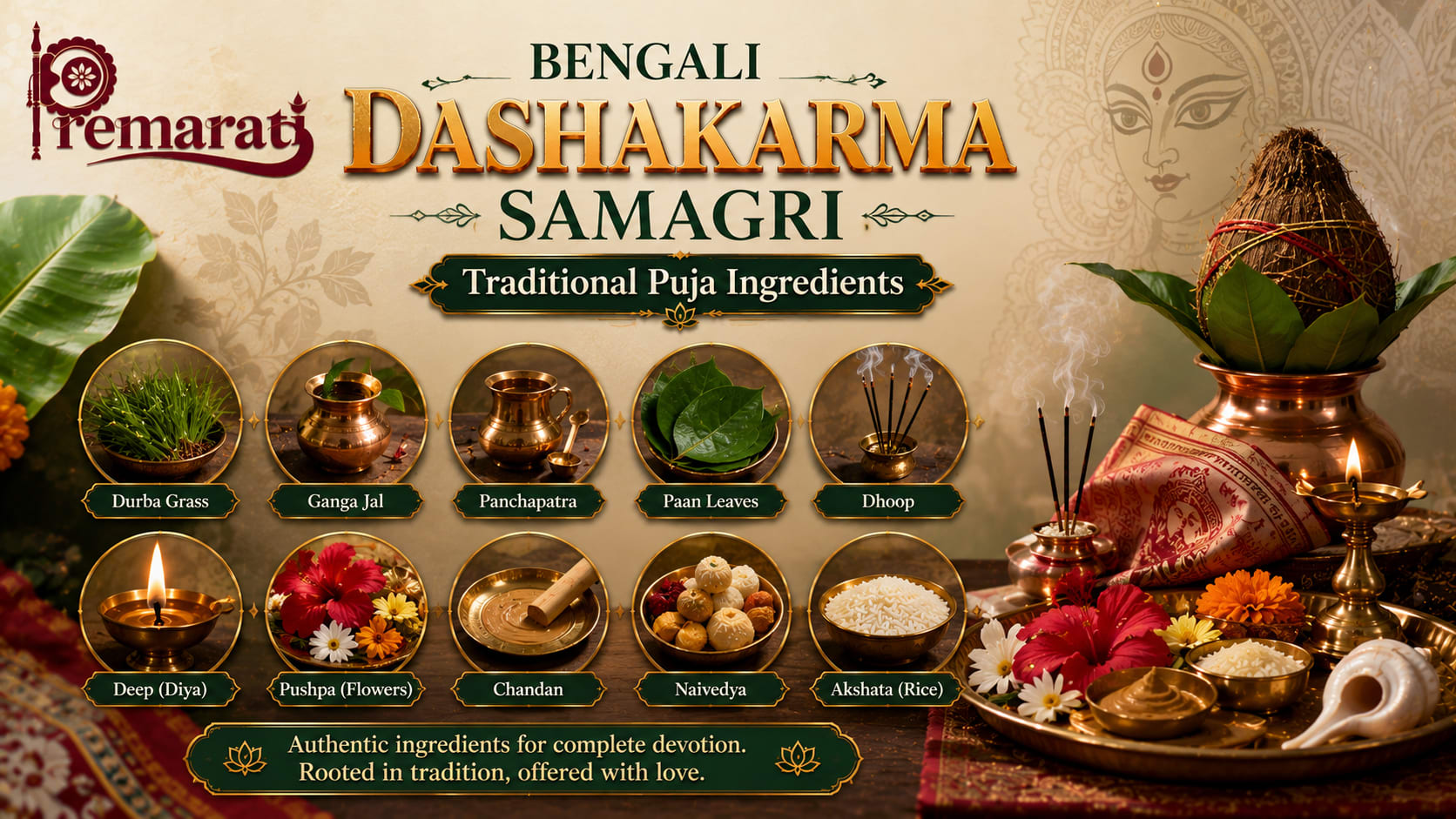
Bengali Dashakarma Samagri is a collection of ritual ingredients and puja essentials for a specific Hindu ceremony in Bengal. The name “Dashakarma” is coupled with a set of rituals, and the items collected for ceremonial use also assist the family or priest in preparing for the worship. Based on the type of puja, local rules, family rules & Priest's guidance, the actual contents may differ.
For many homes, organising Bengali puja samagri is an essential component of preparing for a puja. It enables a number of materials to be gathered beforehand, making the ritual easier to conduct in an organised manner. It's great to have a ready-made kit, but it's important to double-check the kit against the list, depending on the occasion.
Common Items in a Dashakarma Items List
The Bengali tradition of puja goes hand in hand with a family's and community's customs passed down through generations. They can even be made to include multiple family members, such as flower arrangement and offerings, cleaning of vessels, and setting up the house of prayer. Such preparations are useful, but also can help to make the situation meaningful and familiar.
Puja Basics and Sacred Offerings
Rice (atap chal) and akshat: Used for offerings and for marking auspicious moments in the ritual
Kumkum, sindoor and sandalwood paste: For tilak and for decorating the kalash and the deity
Turmeric, betel leaves and supari (betel nut): Common in Bengali puja offerings
Sesame seeds, barley and other grains: Included in many rituals, depending on the ceremony
Red thread (kalawa) and new cloth: Used during the rites
Sacred Leaves, Grass and Flowers
Kusha and durba grass: Widely used in Bengali rituals
Bel leaves and tulsi leaves: Used as offerings, depending on the deity and the puja
Mango leaves: Placed on the kalash
Fresh flowers and garlands: Usually bought close to the ceremony so they stay fresh
Kalash and Ritual Vessels
Kalash (ghat): A water pot used as the sacred centre of the puja
Coconut: Placed on top of the kalash
Copper or brass vessels, small plates and a puja thali: For water, offerings and aarti items
Lamps, Incense and Fire Items
Diya, cotton wicks and ghee or oil: For lighting the lamp
Incense sticks, dhoop and camphor: For fragrance and aarti
Matchbox or lighter: Keep it ready and within reach
Ghee and samidha (sacred wood sticks): Only if your ceremony includes a homa or havan
Fruits, Sweets and Prasad
Seasonal fruits and sweets: For naivedya
Milk, curd, honey and sugar: Used if your ritual includes panchamrit or similar offerings
How to Use This List
Treat it as a checklist, not a fixed rule. Ceremonies, family customs and priests’ instructions all change what is needed, so ask your priest or an elder for the exact list and tick items off one by one. Premarati can help you gather the everyday puja essentials in one go, so you can spend your time on the rituals themselves.
Why Traditional Bengali Puja Items Matter
Traditional Bengali puja items connect a ceremony with the customs followed by families and communities over generations. Preparing them can also involve several family members, from arranging flowers and offerings to cleaning vessels and setting up the place of worship. These preparations are practical, but they can also help make the occasion feel meaningful and familiar.
The significance of individual materials may differ between ceremonies. If a ritual has specific requirements, it is best to follow the guidance of the family priest or a trusted source within the relevant tradition instead of assuming that one list applies to every occasion.
How to Choose a Dashakarma Kit Online
If you get a Dashakarma kit online, make sure you find out the name of the puja and closely read the description of the product against the list you need. See if the kit has the required ingredients, a quantity is stated, and if there are perishable items like flowers or leaves, they are included. Fresh kits could require additional dry goods and accessories, depending on the emphasis of the kit.
That doesn't mean packaging and storage aren't important. Select clearly marked products, ensuring all powders, grains, and other materials are clean, sealed and appropriate for ritual use. If purchasing a date, ensure estimates for deliveries and allow for adequate time to accommodate any goods that are not available. It is easier to make comparisons when a seller clearly spells out the contents.
Prepare with Care
The collection of articles Bengali Dashakarma Samagri is not only a bunch of products, but it is in fact a component of ritual preparation taking place in a specific fashion/habit. Are you feeling burdened with scheduling and storage? Well, here it is. With a good checklist, you may be more relaxed. Begin by picking up your priest's checklist, or ask your family for one. So, have you taken the time to make sure your kit is not just some generic one and has what you need for the ritual?
Great rituals begin with careful preparation. Choose Premarati for traditional Bengali puja items that keep your ceremony smooth, meaningful and rooted in tradition.