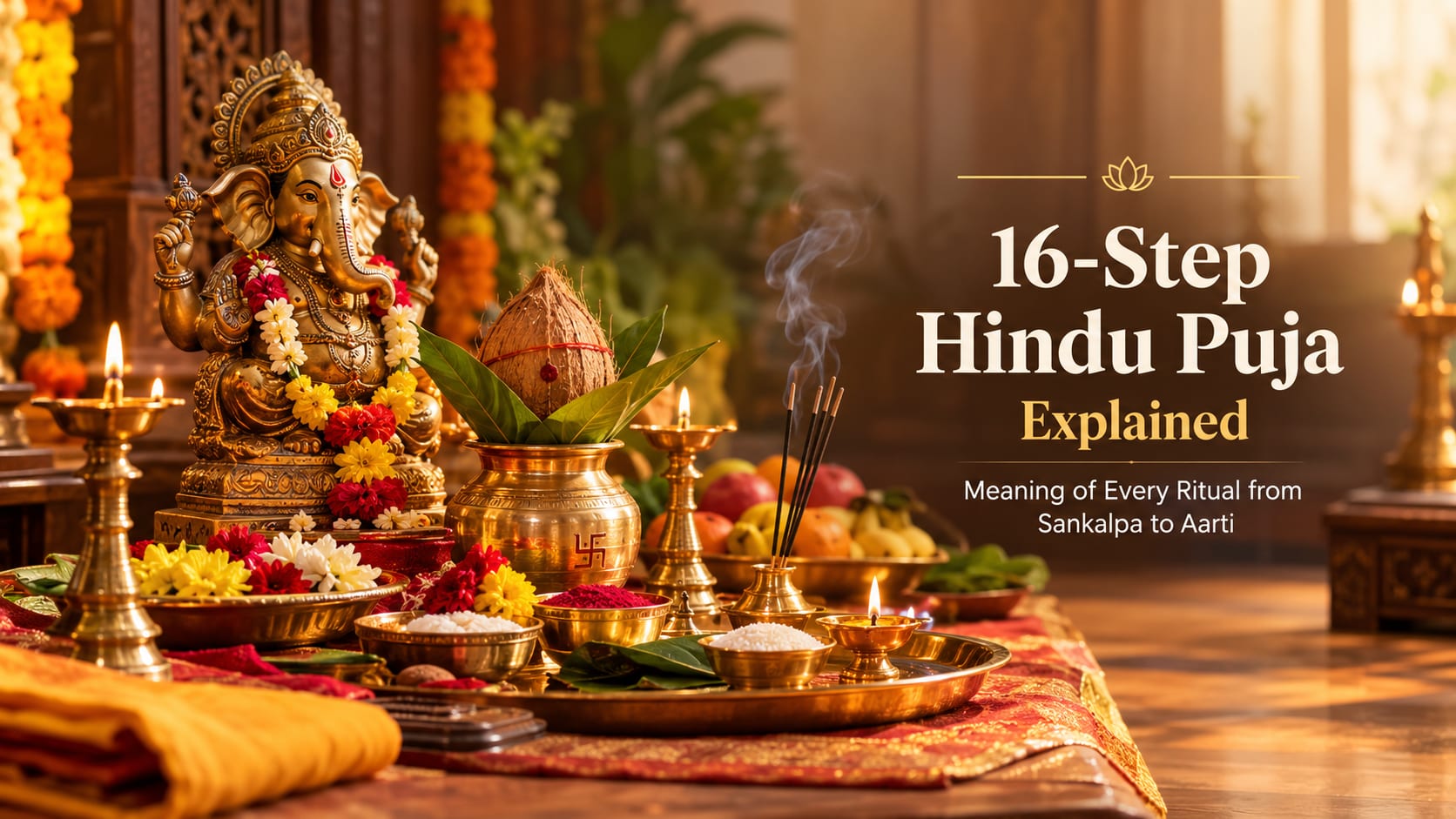
The traditional 16-Step Hindu Puja, or Shodashopachara Puja, consists of a series of respectful offerings to the Divine, from Sankalpa and Avahana to Aarti and Pranam. This guide explains the meaning of each ritual and the common Pooja Articles used during traditional Hindu worship.
16-Step Hindu Puja Explained: Meaning of Every Ritual from Sankalpa to Aarti
Several Hindu ceremonies, both conducted at homes and religious centres, are derived from a traditional practice called Shodashopachara Puja, which refers to the bringing of "sixteen forms of respectful offering. A system of worship dating back ages that includes a series of devout and reverent services, supplanting the presence of the divine as "a guest of honour". While any ceremony can be abstracted from the rigour of the past, the traditional 16-Step Hindu Puja enhances devotees' appreciation of many of the common rituals used during festivals, daily ritual observance and other religious occasions.
About Shodashopachara Puja
Shodashopacharii is based on the "abundant mercy" of providing goodwill to the deity. The deity is venerated in a series of symbolic offerings and is treated as a guest of honour, ‘ayur-barya’ – is seated, is refreshed, is fed, and is treated with proper ‘annamto’ – ‘farewells'. These sixteen steps might vary by each deity you're worshipping and by region, but they are quite similar.
Step 1: Sankalpa – The Sacred Intention
Puja starts with Sankalpa (sitting with awareness), which consists of a conscious declaration of the devotee's intention. This step sets the tone for the worship and serves as a way for participants to focus their minds prior to the worship.
Step 2: Avahana – Inviting the Deity
Avahana is a devotional process of invoking the Image,kalash,h or Idol of the deity into the dedicated space, wherein the devotee holds the deity in reverence.
Step 3: Asana – Offering a Seat
A seat is symbolically presented to the deity as a sign of hospitality and respect. This indicates that God is welcome in the place of worship.
Step 4: Padya – Offering Water for the Feet
Water is symbolically presented to be wiped on the deva's feet. This is an honorific expression of custom aimed towards one's distinguished and revered guests.
Step 5: Arghya – Offering Water of Honour
Arghya is the offering of water in a religious atmosphere of reverence and respect.
Step 6: Achamana – Offering Water for Purification
A symbolic offering of water is provided for tasting and cleansing - for spiritual cleanliness and preparation.
Step 7: Snana – Ritual Bathing
Water is poured over the deity, and in some rituals milk or curd, honey or ghee or sandalwood—a compound and water mixture produced by grinding and steeping sandalwood wood in water—are poured. Abhishekam is known in many traditions as this ritual.
Step 8: Vastra – Offering Clothing
Dignity, care and respect are symbolised through the offering of clean cloth/garments to the deity.
Step 9: Yajnopavita – Sacred Thread Offering
A special thread, if such is customary, is given to the god as a part of worship in traditions.
Step 10: Gandha – Offering Fragrance
Sandalwood paste and other aromatic products are available. The fragrance has a connection to purity and devotion and is a part of Hindu worship.
Step 11: Pushpa – Offering Flowers
In forms of worship, flowers are one of the most frequent offerings for Hindus. They represent beauty, devotion and surrender, giving up thoughts and actions to the Divine.
Step 12: Dhupa – Offering Incense
Incense serves as a carrier of devotion through fragrance. The ascending aroma is perceived symbolically as the prayer ascending to the Divine.
Step 13: Deepa – Offering Light
Lighting of a lamp is a symbol of knowledge or illumination of the spirit and vanishing of ignorance. One of the most recognisable aspects of Hindu worship is the diyas, or oil lamps.
Step 14: Naivedya – Offering Food
The fruits, sweets and the like given to the deity are done in respect and reverence to it. These are offered thereafter after the puja as prasadam.
Step 15: Tambula – Betel Leaves and Nuts
Offerings Traditionally, Tambula is offered to mark a beginning and a meal offering.
Step 16: Aarti and Pranam – Final Worship and Reverence
The puja ends with aarti, where people light a lamp in front of the deity and offer prayers, and devotional songs can be chanted. The devotees then offer pranam, take a blessing, and express their gratitude.
Common Pooja Articles Used in the 16-Step Puja
In many of the sixteen steps,s devotees will be familiar with the materials used. Hindu Pooja Articles which are commonly used in pooja are flowers, sandalwood paste, kumkum, rice, dhoop, natural camphor, diyas, cotton wicks, fruits, sweets, betel leaves, coconuts and water.
These are fundamental to several formulations of puja, but their specific needs depend on the nature of the deity being worshipped, the festival and the tradition.
How PREMARATI Supports Traditional Worship
If you wish to host a traditional puja ceremony, you will need to put together some of the traditional specifications. In the interests of worship and special religious gatherings, gs PREMARATI presents a well-chosen collection of pooja items that can fulfil the requirements of daily worship or special occasions.
Options like natural camphor, incense, dhoop, kumkum, vibhuti, cotton wicks, diyas or other ritual products can help a devotee prepare their mantra-dhwaja, reconnect, and return to traditional practices.
Understanding the Meaning Behind the Ritual
The 16 steps of the ritual of Hindu puja are beautiful because of the meaning behind each step. The offerings of water, flowers, incense and light are expressions of devotion and hospitality towards the Divine.
The knowledge of the sixteen steps would facilitate the devotee in going beyond the mere ritual and focusing on the spiritual significance of worship, whether in the temple, during a festival or at home as puja.
Once the symbolism is grasped, all giving is conscious giving through gratitude, reverence, devotion.